
Program case study
Agent Platform
Governed AI agents with clear permissions and an auditable record of every action.
The operating layer being built to connect channels, agents, people, and systems, with scoped permissions, human approvals, and a record of every action — in development.
In development
- Intelligent Systems
Research context
Agent Platform sits in the Intelligent Systems area. It asks how an agent can act across channels and systems while a person still holds the decision.
The program is in development, so this case study describes the operating layer it is building and does not present it as a deployed product.
Approach
- Give each agent only the permission a task needs, scoped and time-bound.
- Check the organisation's rules before an action runs, not after.
- Pause for a person when an action matters, and record what was decided.
System architecture
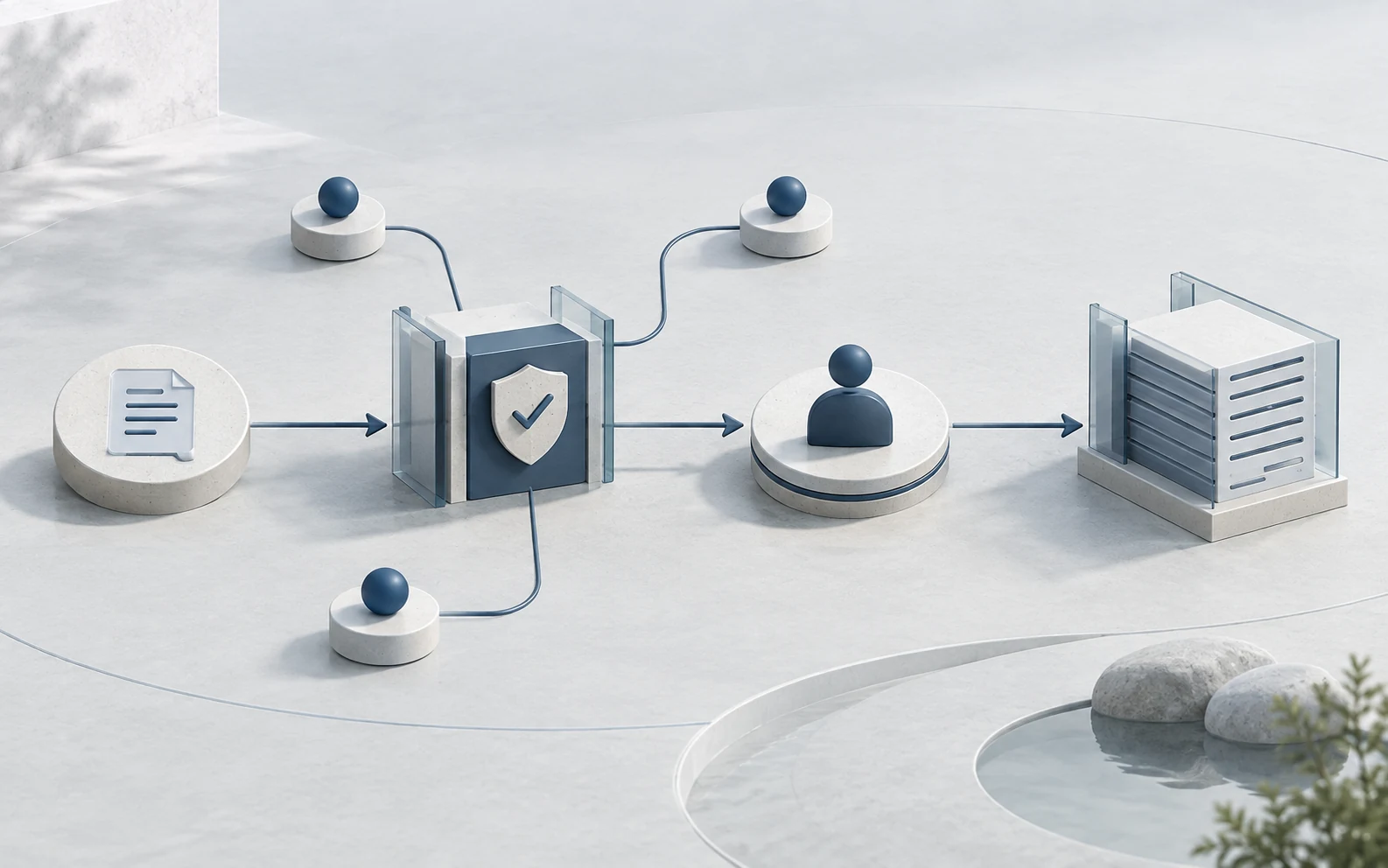
Entry
Channels
The surfaces a request arrives on, from messaging to documents and the web.
Core
Routing, rules, and scoped permissions
Connects channels, agents, people, and systems, and gives each agent only the permission the task needs.
- Scoped permissions
Decision
Human approvals
An action that matters pauses for a person, and the approval covers that action only.
- Human approvals
Record
Action records
Every action and outcome is recorded, so a reply can be traced to who asked and who allowed it.
- Action records
Target
The systems agents act on
The downstream systems an approved action reaches.
Current implementation
- Published status
- In development
The status above is the published one: the operating layer and its three named capabilities are what the program is building.
What this does not claim
- Nothing on this page describes a production deployment, a customer, or a measured result.
- The targets published on the program site are engineering targets, and the site says so itself; they are not results from customer deployments.
Evidence
What the record establishes
The evidence is the program's published description and its in-development status.
What it does not establish
There is no public deployment record yet, so no adoption or performance claim is made.
Roadmap
Every item below is planned, proposed, or under investigation. None of it is shipped, and this list is not a release schedule.
Planned
General availability
Planned: the program site publishes engineering targets for general availability and states that they are targets, not customer results.
Proposed
A public evidence page
Proposed: once the approval and record paths are open to external review, publish what they do and do not establish.
Collaboration
Agent Platform grows through teams that already run agents on customer-facing channels and want the rules and the record to be checkable.
Work on a program with us.
Each program takes on partners where the research question meets real practice — clinical review for AIMed, agent runtime governance for ActantOS and Agent Platform, academic workflows for ScienzaOS, and document-heavy collections for AgenticOCR.
Discuss a collaboration- Clinical pilots
- Research collaborations
- Dataset partnerships
- Student theses
- Open-source contributions